Sequence · 15 min
Fifteen-Minute Sunrise Mobility
A short morning sequence that moves the spine through its four basic directions — forward, backward, sideways and inverted — before the day decides what shape you will spend it in.
- 01
 Mountain PoseTāḍāsanaStand still long enough to notice which foot is taking more weight.
 - 02
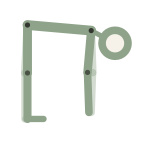 Standing Forward FoldUttānāsanaHinge first, fold second; the knees stay soft.
 - 03
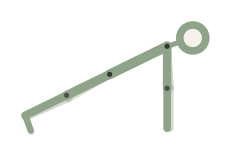 Plank PosePhalakāsanaOne long line from crown to heels. Stop before the hips sag.
 - 04
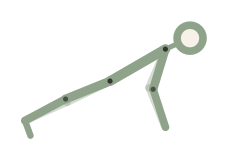 Four-Limbed Staff PoseChaturaṅga DaṇḍāsanaElbows track back along the ribs; shoulders stay above elbow height.
 - 05
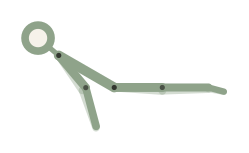 Cobra PoseBhujaṅgāsanaLift with the back muscles first; the hands are a guide, not a lever.
 - 06
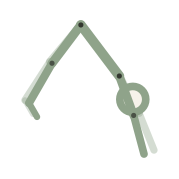 Downward-Facing DogAdho Mukha ŚvānāsanaKeep the knees bent if that is what it takes to keep the spine long.
 - 07
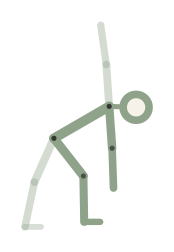 Triangle PoseTrikoṇāsanaBoth sides of the waist long; the bottom hand rests, it does not reach.
 - 08
 Child's PoseBālāsanaForehead down, back ribs wide. This is where the practice settles.
 - 09
 Corpse PoseŚavāsanaThree minutes. Blanket over the body if the room is cool.
What the four directions give you
Forward folding in the first minutes is not about hamstring length; it is a way of waking the back of the body after eight hours in one position. Backward extension comes next, once the spine is warm, and is deliberately small in this sequence — a cobra, not an upward dog.
The sideways bend in triangle is the direction most home practices skip entirely, and it is the one that shows up first when someone has been sitting with one shoulder lower than the other. The inverted position in Down Dog closes the sequence by taking the head below the heart briefly, which is a mild and useful change of pressure for most people.
How slow to go
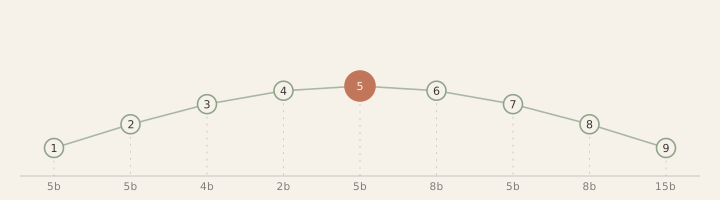
Fifteen minutes is about 65 breaths at a normal rate. If you are finishing in nine minutes, you are rushing the transitions and probably holding your breath at the harder moments. The breaths listed per pose are a floor, not a ceiling — add two or three to any pose that feels stiff.
Do not add a second round on the first day. The value of a morning sequence is that it is repeatable every day; a version that takes twenty-five minutes will quietly stop happening by Wednesday.
This sequence is informational only, not medical advice, and not a substitute for a teacher who can see you move. Skip any step that hurts, and check with a clinician about injuries, pregnancy or recent surgery.