Sequence · 30 min
Thirty-Minute Backbend Ladder
Five backbends of increasing strength, in the order they should be practised, each one held briefly. The ladder format exists so that the deepest pose is reached on a spine that has already been through four gentler ones — and so that skipping a rung is an obviously bad idea.

- 01
 Mountain PoseTāḍāsanaStand and lengthen the front of the body before bending it backwards.
- 02
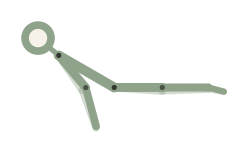 Cobra PoseBhujaṅgāsanaThe bottom rung: back muscles lift, hands steer.
- 03
 Upward-Facing DogŪrdhva Mukha ŚvānāsanaNext rung: arms straight, thighs off the floor, shoulders back and down.
- 04
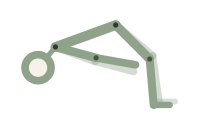 Bridge PoseSetu BandhāsanaBlock under the sacrum. The front of the body opens without effort.
- 05
 Camel PoseUṣṭrāsanaKneeling, hands to the lower back first. Hips over the knees throughout.
- 06
 Bow PoseDhanurāsanaTop rung: catch the ankles or a strap, and press the feet into the hands.
- 07Bridge PoseSetu BandhāsanaBack to the supported bridge, which now feels like a rest.
- 08
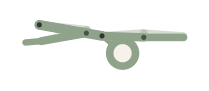 Child's PoseBālāsanaKnees wide, hips back. Counter the whole ladder at once.
- 09
 Corpse PoseŚavāsanaThree to four minutes. Let the back settle flat into the floor.
Why the ladder, and why it is not optional
| Rung | Pose | Where the movement comes from |
|---|---|---|
| One | Cobra | Back muscles, arms bent and steering |
| Two | Upward dog | Arms and back together, thighs lifted |
| Three | Supported bridge | Passive — no muscular effort at all |
| Four | Camel | Hip flexors and thoracic spine, hips over knees |
| Five | Bow | The whole front line, from knees to chest |
Backbends load the spine in the direction it spends least time in, and the segments that move first are not the segments that need to. Working up through Cobra and Upward Dog to Camel and Bow means the thoracic spine is already awake by the time the deepest pose arrives, so the lower back is not asked to make up the difference.
The rungs are also short. Four to five breaths each is enough to load the shape and not enough to fatigue it — fatigue is what turns a backbend into a compression, which is the failure mode of every long backbend class.
The one thing that ends a backbend early
Pinching in the lower back. It is not a stretch and it is not a sign of progress; it means the segment that is moving is the one least able to. Coming down a rung is the correct response, not pushing through.
The countermeasure is the front of the body: if the quadriceps, the hip flexors and the chest are long, the lower back does not have to do the work alone. That is why the supported bridge sits in the middle of the ladder rather than at the end.
This sequence is informational only, not medical advice, and not a substitute for a teacher who can see you move. Skip any step that hurts, and check with a clinician about injuries, pregnancy or recent surgery.