Sequence · 12 min
Twelve-Minute Neck and Shoulder Unwind
A short practice aimed at the two places a day at a desk stores its tension. There is no strengthening here and nothing is held long; the whole point is to move the shoulder blades through a range they have not seen since the morning.

- 01
 Mountain PoseTāḍāsanaStand and let the arms hang heavy, so the shoulders can drop away from the ears.
- 02
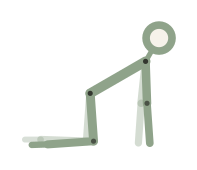 Cat and CowMārjāryāsana / BitilāsanaFour rounds of cat and cow, moving the shoulder blades as much as the spine.
- 03
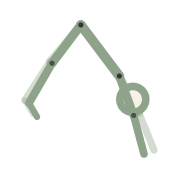 Downward-Facing DogAdho Mukha ŚvānāsanaHands on the seat of a chair if the wrists complain. Shoulder blades slide apart.
- 04
 Cow Face PoseGomukhāsanaSeated or in a chair: right arm over the shoulder, left hand up the back, strap if needed.
- 05Cow Face PoseGomukhāsanaReverse the arms. Keep the chin level and the neck free.
- 06
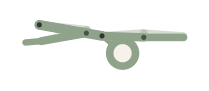 Child's PoseBālāsanaForearms on a chair seat and the head resting on the arms, if the floor is too far down.
- 07
 Corpse PoseŚavāsanaTwo minutes, palms up, jaw slack.
The shoulder blades, not the shoulders
| Pose | What it moves | Where it can go wrong |
|---|---|---|
| Mountain | Sets the shoulders down before anything else | Ribs flaring to look taller |
| Cat and Cow | Blades sliding on the ribcage | Moving only from the lower back |
| Downward dog | Blades apart as the arms press | Weight dumping into the wrists |
| Cow face arms | Shoulder rotation each way | The neck following the top arm sideways |
| Child's pose | The whole area, unloaded | The head turned to one side |
Most of what feels like 'tight shoulders' is the shoulder blades having stopped sliding on the ribcage. When they move, the neck has less to compensate for and the whole area loosens without anything being stretched.
That is why Cat and Cow and Downward Dog come before the arm work. Both of them move the blades over the ribs, which is the movement that is missing, rather than pulling the arms into positions the neck then has to survive.
Why it is twelve minutes and not thirty
Neck and shoulder work responds badly to long holds. The muscles here are small, they are used all day, and they fatigue quickly — a three-minute hold in a shoulder stretch usually produces more guarding than release.
Ten breaths on each side, done twice a day, will change more in a fortnight than one long session a week. This sequence is designed to be interrupted: if you only get through the first three poses, that is still worth doing.
This sequence is informational only, not medical advice, and not a substitute for a teacher who can see you move. Skip any step that hurts, and check with a clinician about injuries, pregnancy or recent surgery.